Sustainability Policy and Goals
Rhombho Property Company Limited Public Company operates with a vision and mission to be a company dedicated to inspiring and creating high-quality living environments.
The company is committed to delivering the best products and services to its customers. The company has set sustainable development goals and discloses sustainability information in accordance with the SET Sustainability Reporting Guide for listed companies provided by the Stock Exchange of Thailand.
Sustainability Policy and Objectives
The Company recognizes and emphasizes conducting its business under the principles of sustainable development, considering the creation of value in three areas: economic, social, and environmental. This is based on good corporate governance practices to ensure stable and sustainable growth for the Company. The following are the practices outlined:
- The Company prioritizes operations to achieve sustainability in all processes throughout the business chain. It also promotes and supports stakeholders across the business chain to operate in accordance with sustainable development principles, aiming to create value and long-term growth for the Company.
- The Company has established an efficient, transparent, and rigorous management system by implementing business ethics, anti-corruption policies, and internal control and auditing processes that meet high standards. This is done to build trust among the Company's stakeholders.
- The Company conducts its business with fairness, adhering to laws, trade regulations, fair competition practices, and refrains from any benefits derived from illegal or unethical operations, policies, and practices.
- The Company promotes the adherence to human rights principles as guaranteed and protected by the Constitution of the Kingdom of Thailand, taking into account human dignity, rights, freedom, equality, and non-discrimination against individuals based on gender, age, race, religion, skin color, or beliefs.
- The Company treats its employees fairly, recognizing them as key factors in creating value and driving the business forward. Therefore, the Company ensures a supportive work environment, promotes happiness, and aims to provide a good quality of life. It also prioritizes the development of employees' potential, offering training to enhance job skills and providing equal opportunities for career growth and advancement.
- The Company values its stakeholders by identifying stakeholder groups, understanding their needs, and ensuring a comprehensive response to the needs of all stakeholders. This includes establishing channels for receiving suggestions and complaints from stakeholders.
- The Company develops products that meet consumer needs, focusing on quality and standardized services to ensure customer satisfaction.
- The Company promotes community and social involvement to foster strength and sustainability, participating in various activities such as education, religion, sports, human resource development, promoting employment, and organizing community development projects.
- The Company prioritizes environmental quality management and promotes efforts to prevent and reduce environmental impacts arising from its operations, such as construction management, waste and garbage management, greenhouse gases, and more. The Company also actively engages with other sectors of society in organizing activities to preserve and improve environmental quality.
- The Company emphasizes and promotes the efficient use of resources and energy, as well as establishing guidelines and methods to reduce the consumption of resources and energy.
- The Company prioritizes the management of safety, occupational health, and the working environment for its employees, extending this focus to include the stakeholders of the Company.
- The Company develops and promotes innovation, both in products and work processes, and supports collaborative innovation with the Company's stakeholders to create value for the Company, as well as for society and the environment.
- The Company emphasizes comprehensive risk management in all work processes, establishing guidelines for managing and continuously monitoring risk management results to increase opportunities and reduce losses in business operations.
Sustainable development goals
The Company has established its sustainable development goals in alignment with its business direction and strategic objectives. It focuses on developing high-quality real estate projects and conducting business with responsibility toward society and the environment. The Company recognizes the importance of complying with relevant standards and regulations to prevent potential impacts on communities, society, and the environment.
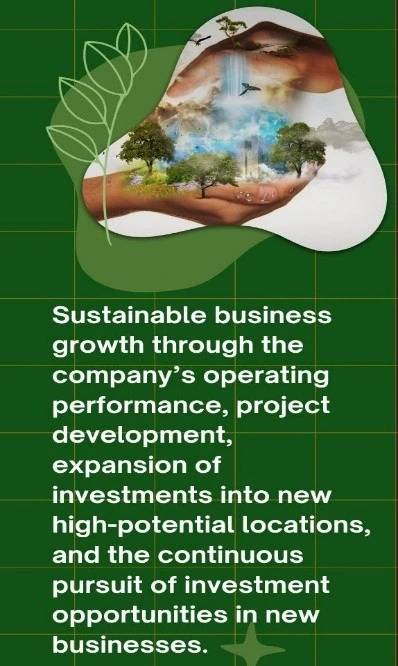
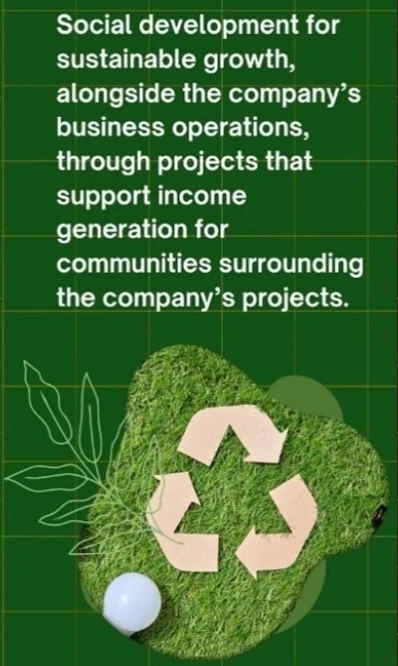
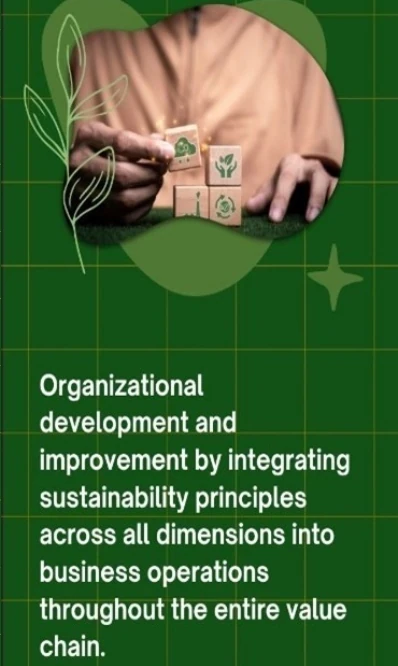
Its approach to sustainable development encompasses the economic, social, and environmental dimensions, guided by the following business principles:
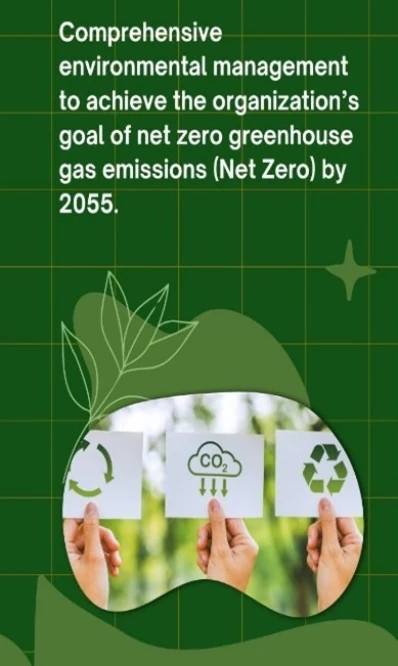
Sustainability Development Goals
The Company has established sustainability management targets to ensure that its sustainability management is carried out efficiently and effectively. These targets are designed to align the Company’s sustainability performance with the United Nations Sustainable Development Goals (Sustainable Development Goals: SDGs). The details are as follows:
| Sustainability strategy | Indicators | Goal for 2025 | Performance Results for 2025 |
|---|---|---|---|
| Environment | |||
| Electricity Consumption | Reduced by5% | 439,780.74 kilowatts | |
| Water Consumption | Reduced by5% | 21,910 cubic meters (m3) | |
| Waste Management | Under Target Setting | Under Target Setting | |
| Consumption of Office Supplies | Under Target Setting | Under Target Setting | |
| Air Emissions | In accordance with the Environmental Impact Assessment (EIA) standards. | ||
| Social | |||
| Employee Training Hours | 6 hours per person per year | 12 hours per person per year | |
| Work-related Fatal Accidents | None | None | |
| Complaints Regarding Human Rights Violations from the Company’s Employees and Business Partners | None | None | |
| Economic and Good Corporate Governance | |||
| Number of Complaints or Disputes Related to Unfair Competition | None | None | |
| Number of Other Complaints or Disputes | None | None | |

Identification of material sustainability issues
The company defines sustainability development issues by collaborating with stakeholders involved in the company's operations to reflect its sustainability actions across all dimensions, including economic, social, environmental, and governance aspects.
Process for identifying key sustainability issues
1. Identification of Sustainability Issues
The Company selects sustainability issues that are relevant to its business and stakeholders in each business process, alongside aligning these issues with the United Nations Sustainable Development Goals (SDGs) to ensure that its operations contribute to global sustainability objectives.
2. Arrangement of important issues
The Company prioritizes key sustainability issues based on their impact on the Company's operations and their effects on the stakeholders. This involves assessing both the significance and potential consequences of each issue on business performance and stakeholder interests.
3. Issue investigation
The Company presents key sustainability issues and their prioritization to the Corporate Governance and Sustainability Committee for review. The committee then evaluates these significant issues and provides guidance on how to integrate them into the Company's sustainability operations and strategies.
4. Review
The Company conducts an annual review of key sustainability issues to ensure their relevance and alignment with the Company's sustainable development goals. This review ensures that the identified issues remain appropriate for driving the Company's long-term sustainability strategy.
Assessing the importance of material sustainability issues
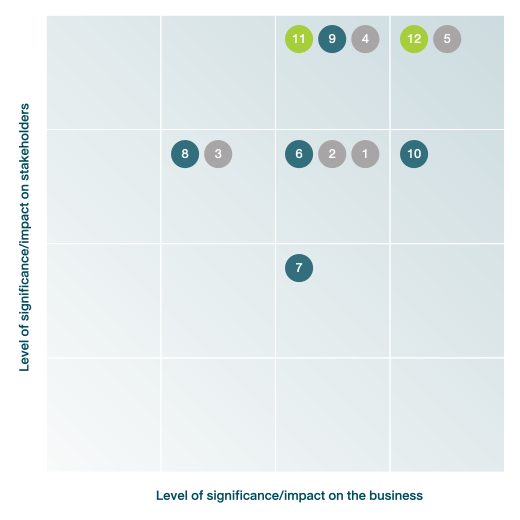
- Corporate governance
- Risk management
- Sustainable Supply Chain Management
- Anti-corruption measures in corporations
- Customer Satisfaction and Expectations
- Responsibility for products and services
- Human resource development and management
- Workplace safety
- Innovation and technology development
- Human rights
- Resource and energy management
- Noise/Air and Waste Pollution Management